Final-Batch Sale · HippieBus Weekender Now Only $69.95

Handmade in Taos, New Mexico · Final batch of 850

HippieBus Weekender: The Hand-Quilted Travel Bag With a VW Bus on the Front

★★★★★ 4.6/5 from 128,421 customers

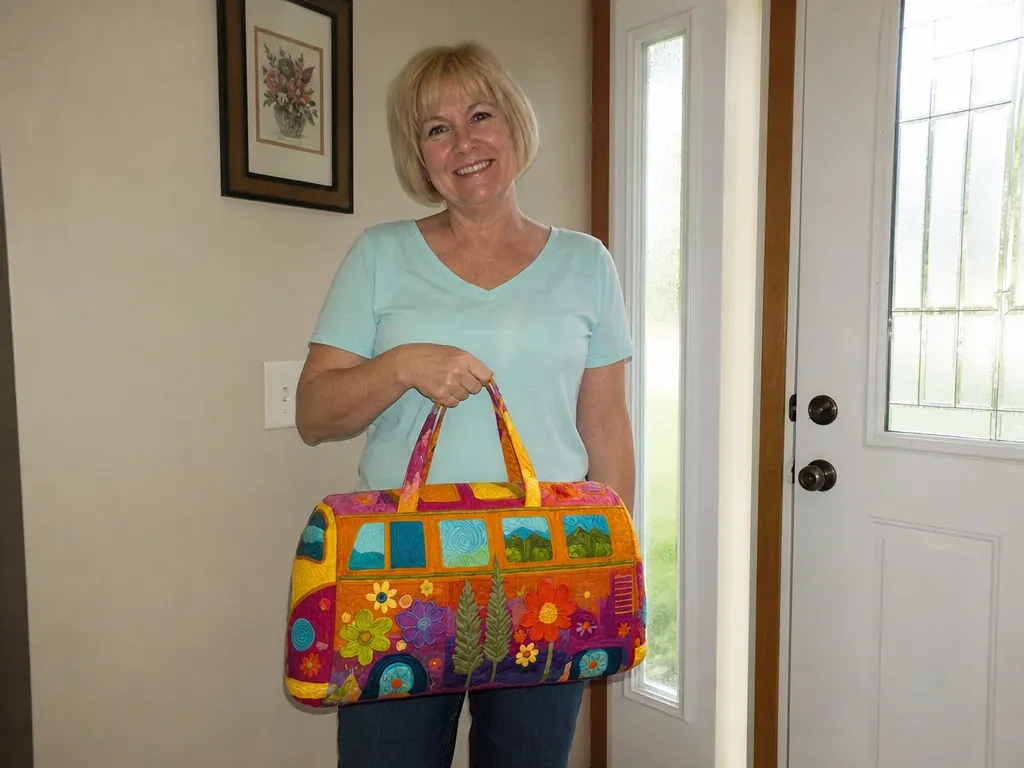
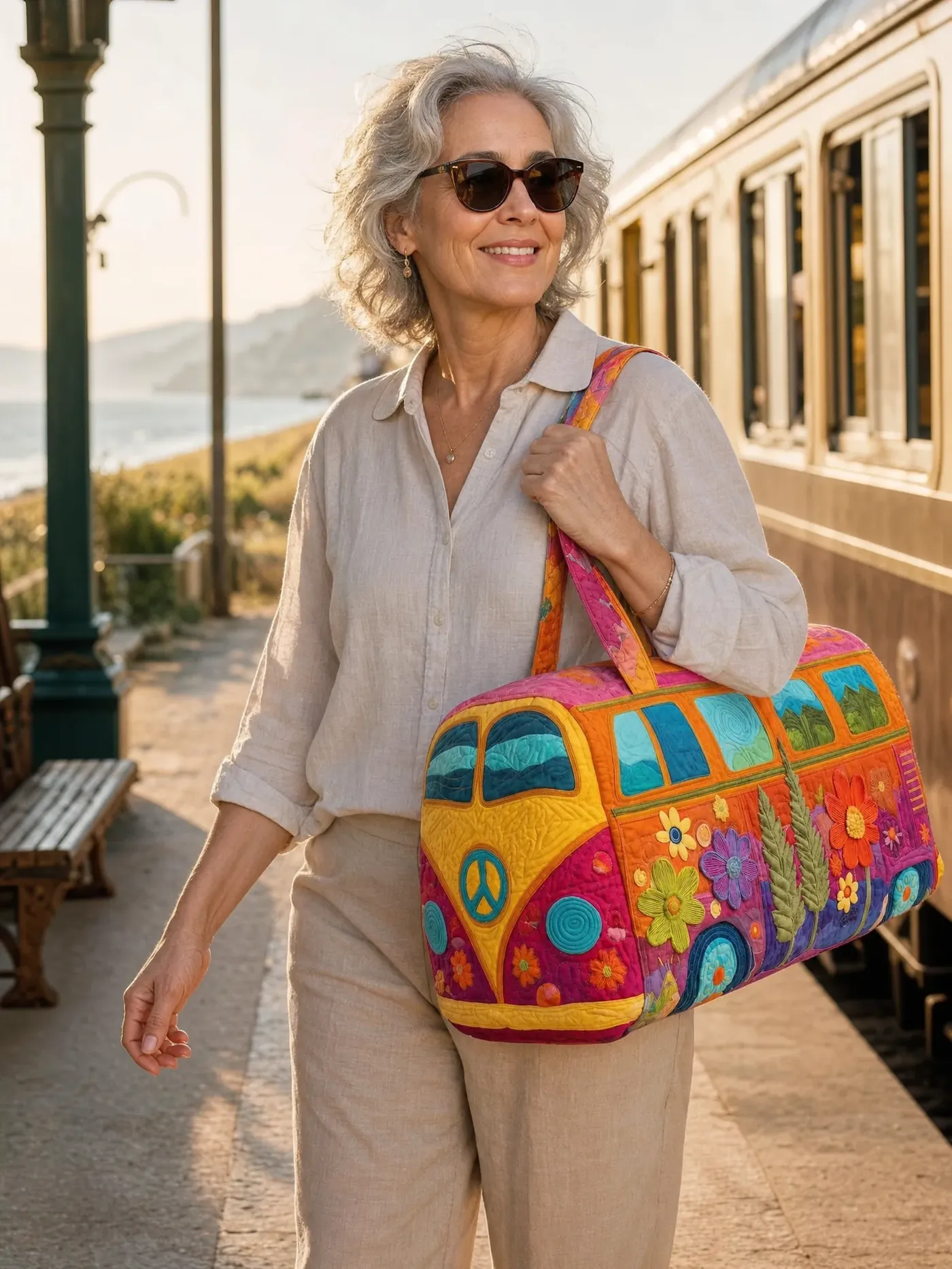
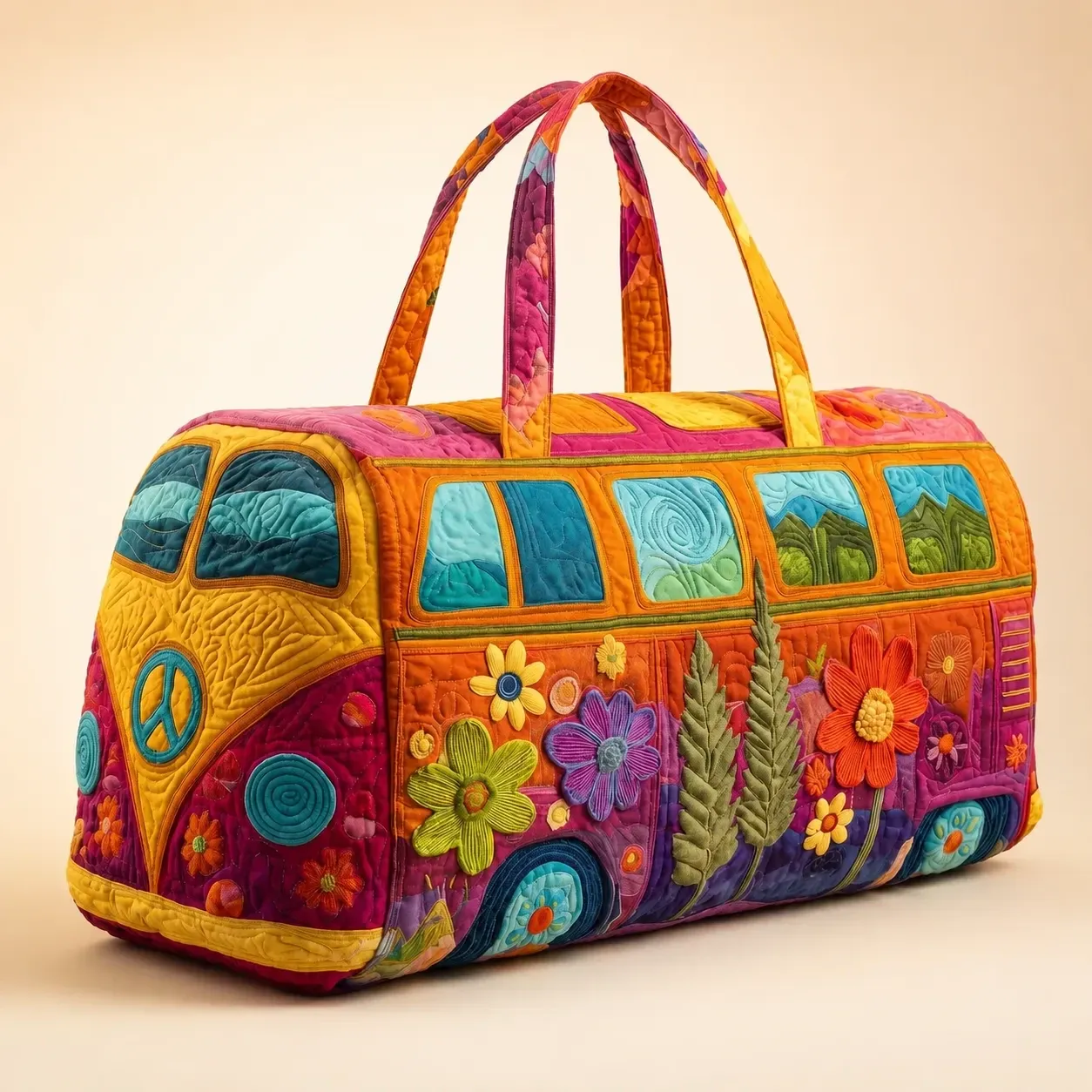
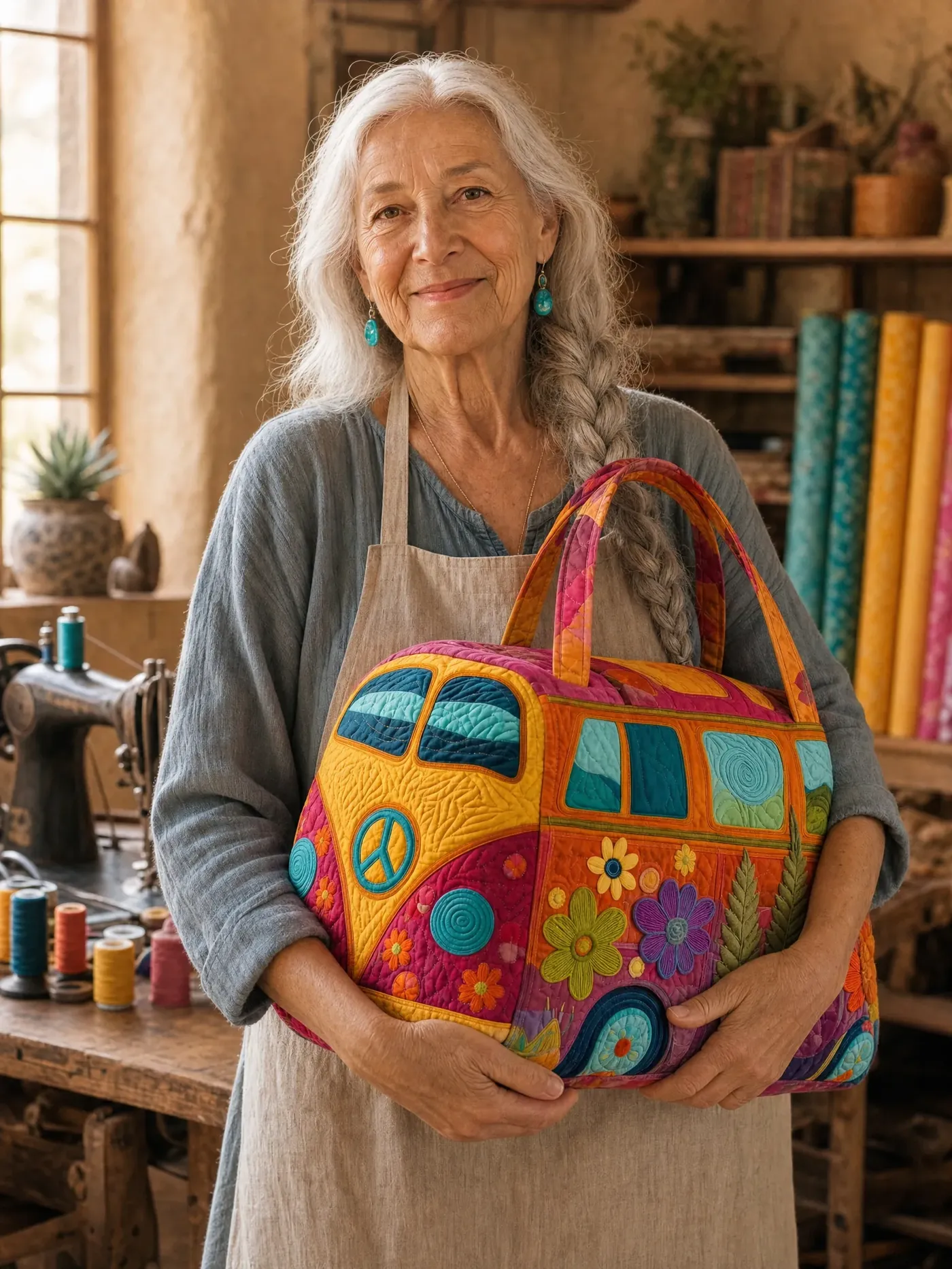
The HippieBus Weekender is a padded cotton travel bag, sized for two or three days away. Every one is cut, quilted, appliqued and numbered by hand in a small adobe workshop in Taos. On the front there's a VW bus made from layered pieces of real fabric, with a teal peace sign, quilted windows and flowers up the side.

The zipper goes all the way around so the HippieBus Weekender opens flat, and it fits most US domestic carry-on allowances. The maker is retiring, and this last batch of 850 is the end of it.

  • Ships within 48 hours
  • 30-day money-back guarantee
  • Hand-numbered HippieBus Weekender tag
HippieBus Weekender quilted VW bus travel bag50%OFF
14 hours of handwork per HippieBus WeekenderPremium cotton over poly battingNo two alikeFits most US carry-on limits
HippieBus Weekender Basics

So What Exactly Is the HippieBus Weekender?

Quilting, as it is usually defined, is the process of joining at least three layers of fabric together, either by hand with a needle and thread or with a sewing machine, and an array of stitches passed through all layers creates a three-dimensional padded surface. The three layers are typically called the quilt top, the batting, and the backing. On the HippieBus Weekender that means a premium cotton top over poly batting, which is where the padding comes from, not a glued foam sheet.

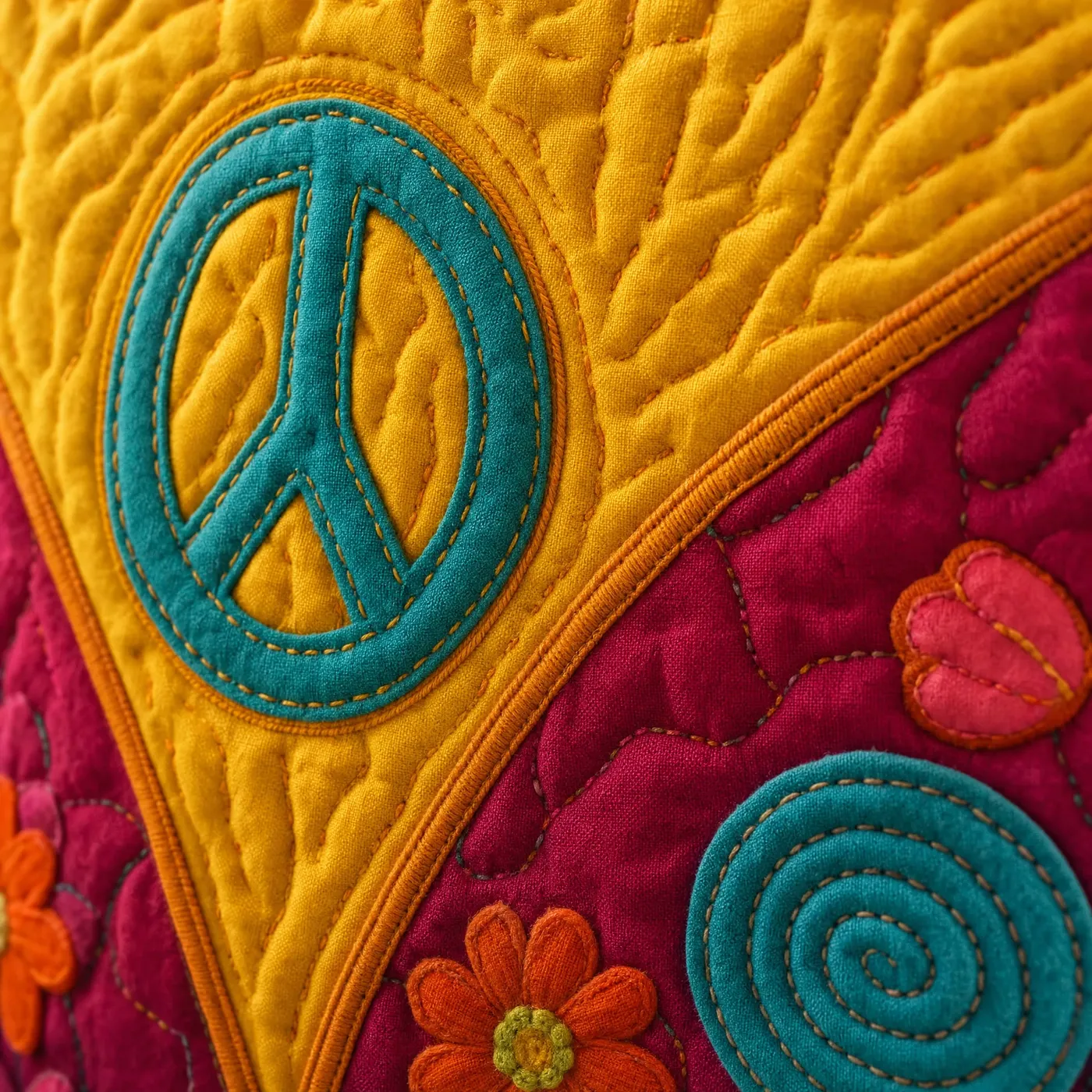
Close-up of the peace sign applique and quilting on the HippieBus Weekender
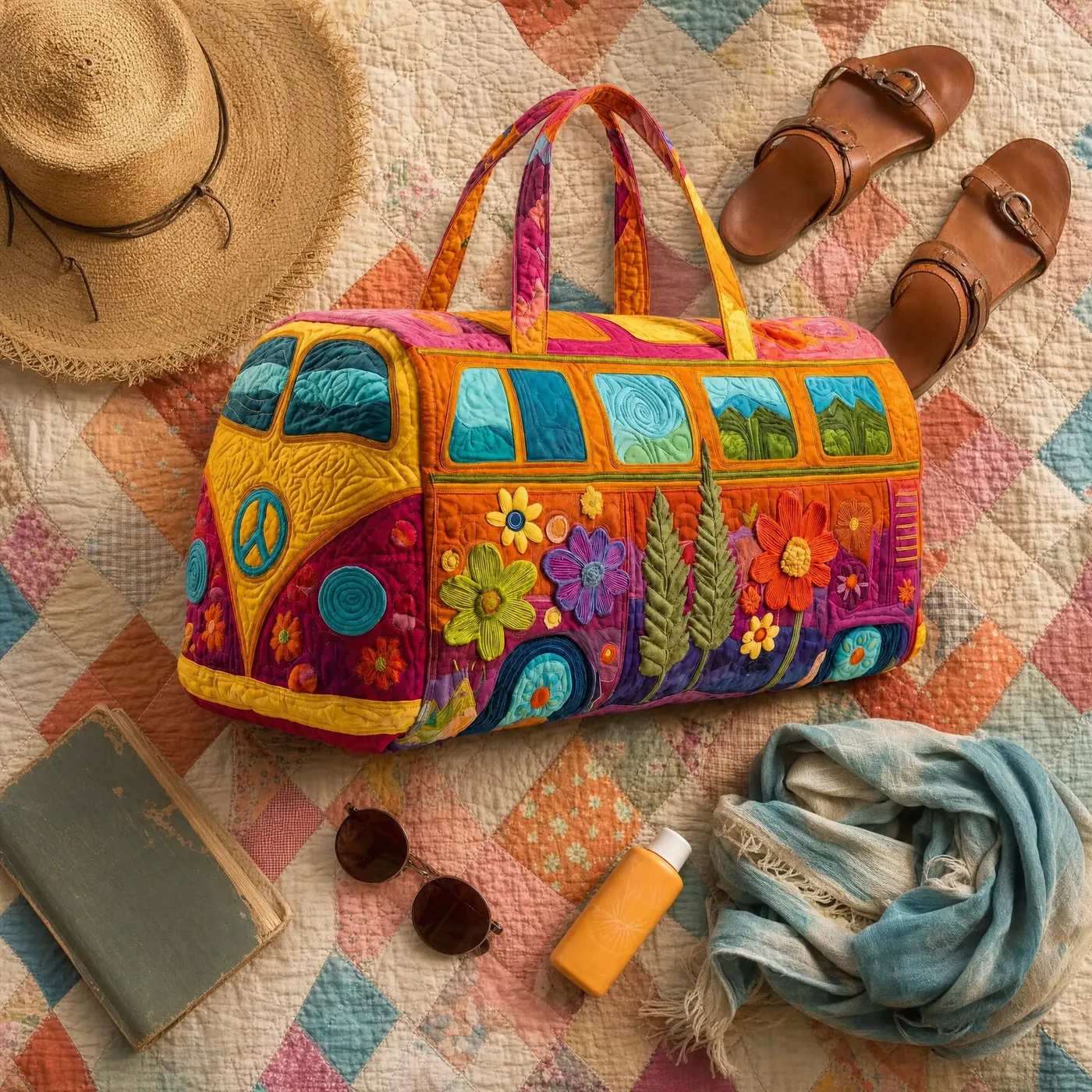
HippieBus Weekender with sandals, hat and travel items

The bus panel is applique, ornamental needlework in which pieces of fabric in different shapes are sewn onto a larger piece to form a picture. Applique, in contrast with patchwork, lets the maker create naturalistic designs like flowers, animals, people or buildings, rather than simply geometric ones. Like embroidery, it had a humble beginning as a way to patch holes and strengthen worn areas, before moving into quilts and blankets.

Applique has a long reach in American quilting. Dresden Plate and Sunbonnet Sue are two traditional quilt blocks built with both patchwork and applique, and Baltimore album quilts, Hawaiian quilts and Amish quilts use it too. It is particularly suitable for work meant to be seen from a distance, such as banners, which may be part of why a bus panel on a HippieBus Weekender reads clearly from across a hotel lobby.

The Story

The Story Behind the HippieBus Weekender
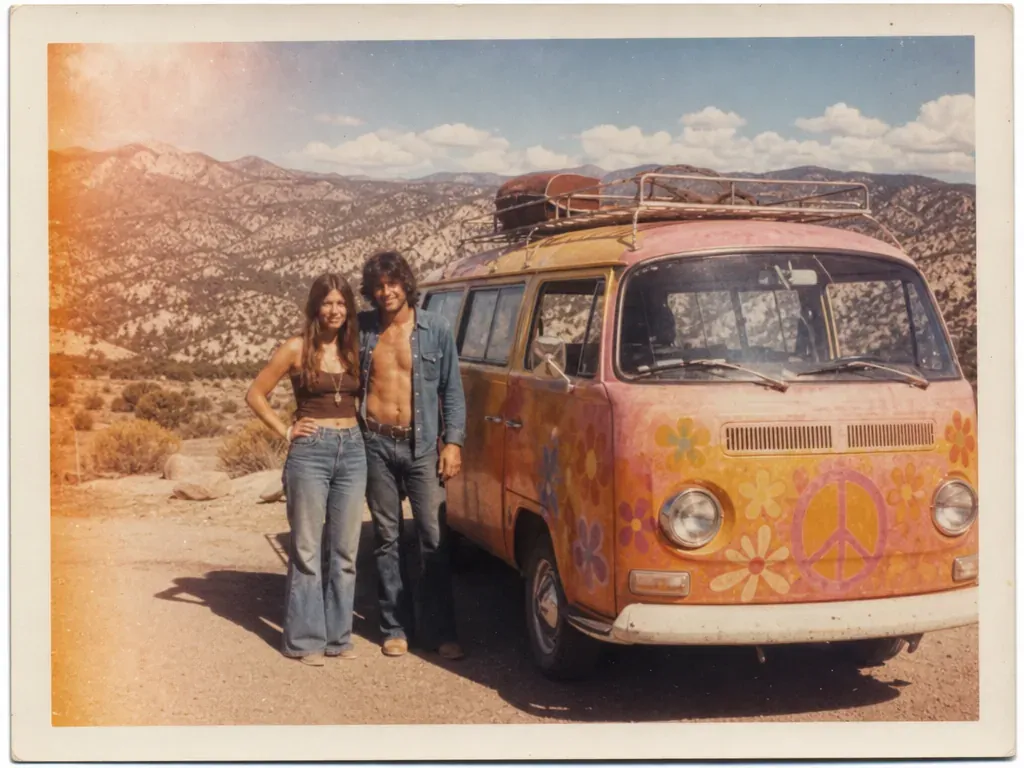
The 1973 painted VW bus trip photo that inspired the HippieBus Weekender

The VW bus was a fitting choice for the HippieBus Weekender. In the 1960s the Microbus came to represent a growing angst in America, and a certain part of society took to traveling around in Microbuses covered with peace signs and flowers. The Smithsonian's road transportation curator Roger White has called it a way of thumbing their noses at the establishment. The first one went into production March 8, 1950, at a Volkswagen plant in West Germany, and people loved that it could haul goods of all kinds, human and otherwise. With a roomy interior and an air-cooled engine, it was easy to operate and maintain.

Rosie Delgado rode one down the Baja coast in 1973, at 21, and came home to Taos with a cedar box of market fabric. In 1986 she used it to quilt a bag for a friend's cross-country drive, bus on the front, on her mother's industrial Singer.

The bus on the HippieBus Weekender wears a peace sign where the VW badge would normally go, and that detail comes straight from the era. In the U.S. the Type 2 was referred to by some as a hippie van or bus because it was used to haul groups of young people and their camping gear and other supplies to concerts and anti-war rallies. Some owners painted colorful murals on their buses and swapped the VW logo on the front for a peace symbol. When Jerry Garcia died in 1995, Volkswagen even ran an ad with a drawing of the front of a bus with a tear streaming down it.

The bus itself was reportedly the brainchild of Dutch businessman Ben Pon, an importer of Beetles to the Netherlands, who saw a market for a small bus and sketched out his concept in 1947 after seeing a flatbed parts-hauler built on a Beetle chassis at the Volkswagen plant. It collected a pile of nicknames over the years, including the Combi, for combined-use vehicle, and the Splittie, for its split windshield, and in Germany it was known as the Bulli.

Volkswagen's marketing for the new bus was an extension of its Beetle advertising, promoting its simple styling and usefulness as a vehicle for home, work and play. In the United States it was seen as a cost-effective alternative to the family station wagon, and the first VW Westfalia campers were exported to the U.S. in 1956, outfitted with beds, sinks and more.

There's a nice bit of history in that cedar box, too. Quilting can be considered one of the first examples of upcycling, since quilters have historically made extensive use of remnants and offcuts to create new things. The earliest known quilted garment shows up on a carved ivory figure of an Egyptian pharaoh, and in 1924 archaeologists found a quilted floor covering in Mongolia dated to somewhere between 100 BC and 200 AD. The first HippieBus Weekender, made from Baja market scraps, fits right into that tradition.
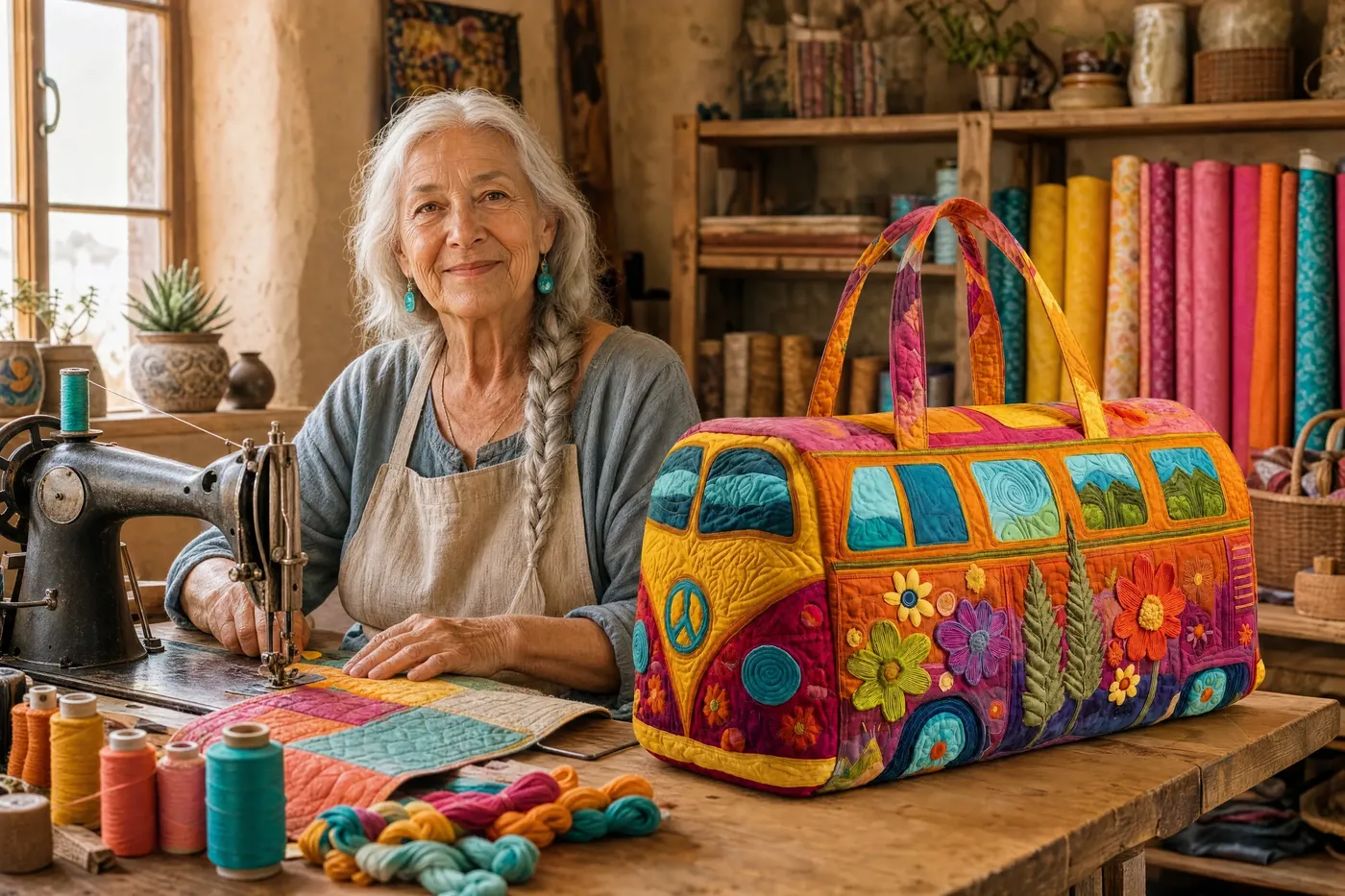
Rosie at her Singer sewing machine in the Taos workshop
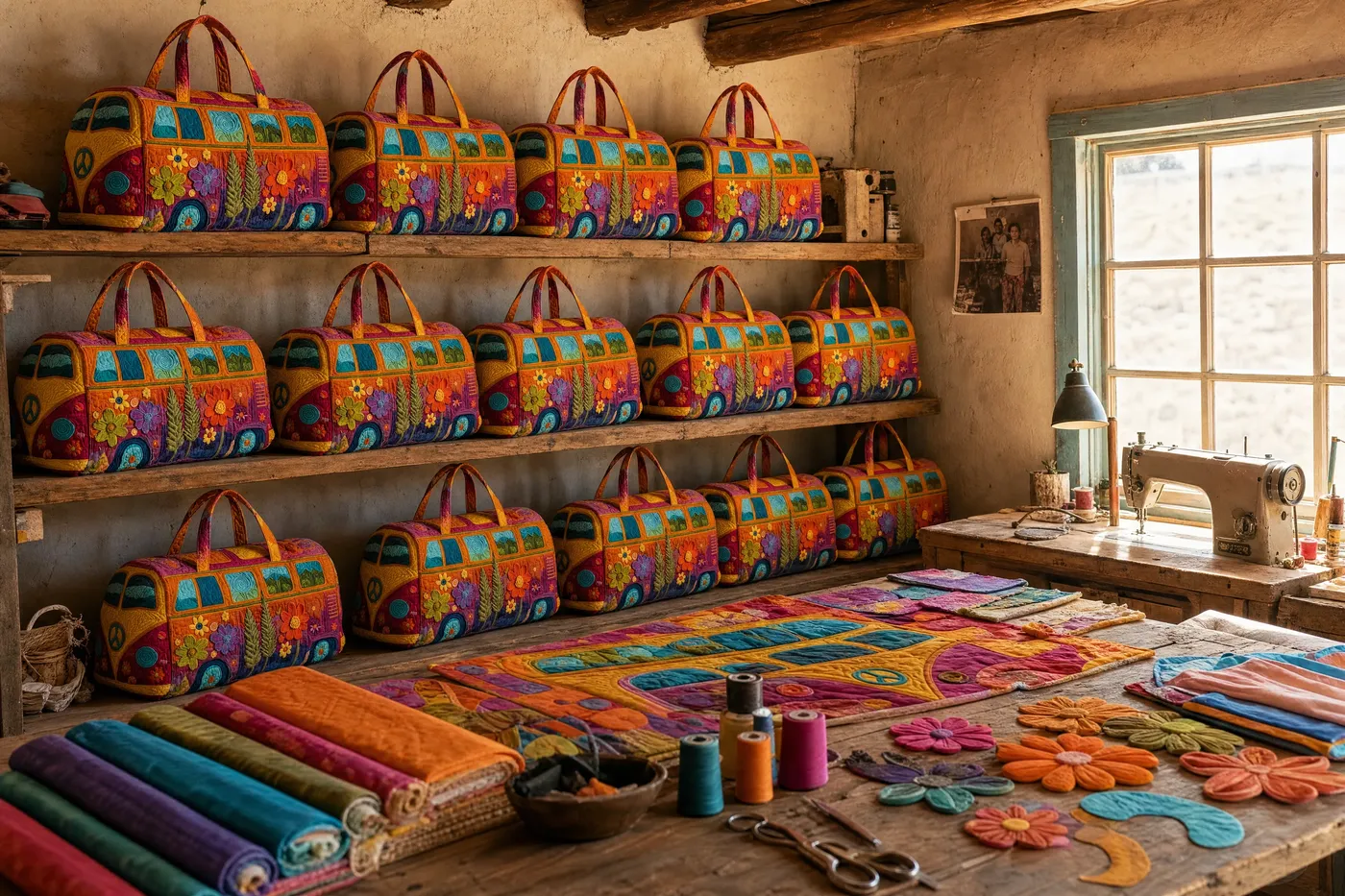
Finished HippieBus Weekender bags on the workshop shelves in Taos

Taos is a fitting home for it. The first artist colony there was established in 1898 by painters Ernest Blumenschein and Bert Phillips, six artists formed the Taos Society of Artists in 1915, and the town has since developed a reputation as a counterculture mecca and a beacon for artists, attracting the likes of Georgia O'Keeffe, D.H. Lawrence and Dennis Hopper. Rosie's first bag got her friend stopped in diners from New Mexico to Ohio, and over the next 39 years a Santa Fe gift shop, a Boulder boutique and later an online shop run by her granddaughter June sold more than 14,000 of them. She is 74 now, has arthritis in most of her knuckles, and after three years without finding a successor she has sewn her last batch of the HippieBus Weekender. About 850 are left and there will be no restock.

About 20 miles northwest of town is the D. H. Lawrence Ranch, originally known as the Kiowa Ranch and now owned by the University of New Mexico, where the English novelist lived in the 1920s. Closer in, the homes and studios of the old Taos painters, such as the Ernest L. Blumenschein House and the Nicolai Fechin House, are listed on the National Register of Historic Places and can still be visited.
14 Hours of Handwork

How a HippieBus Weekender Is Made

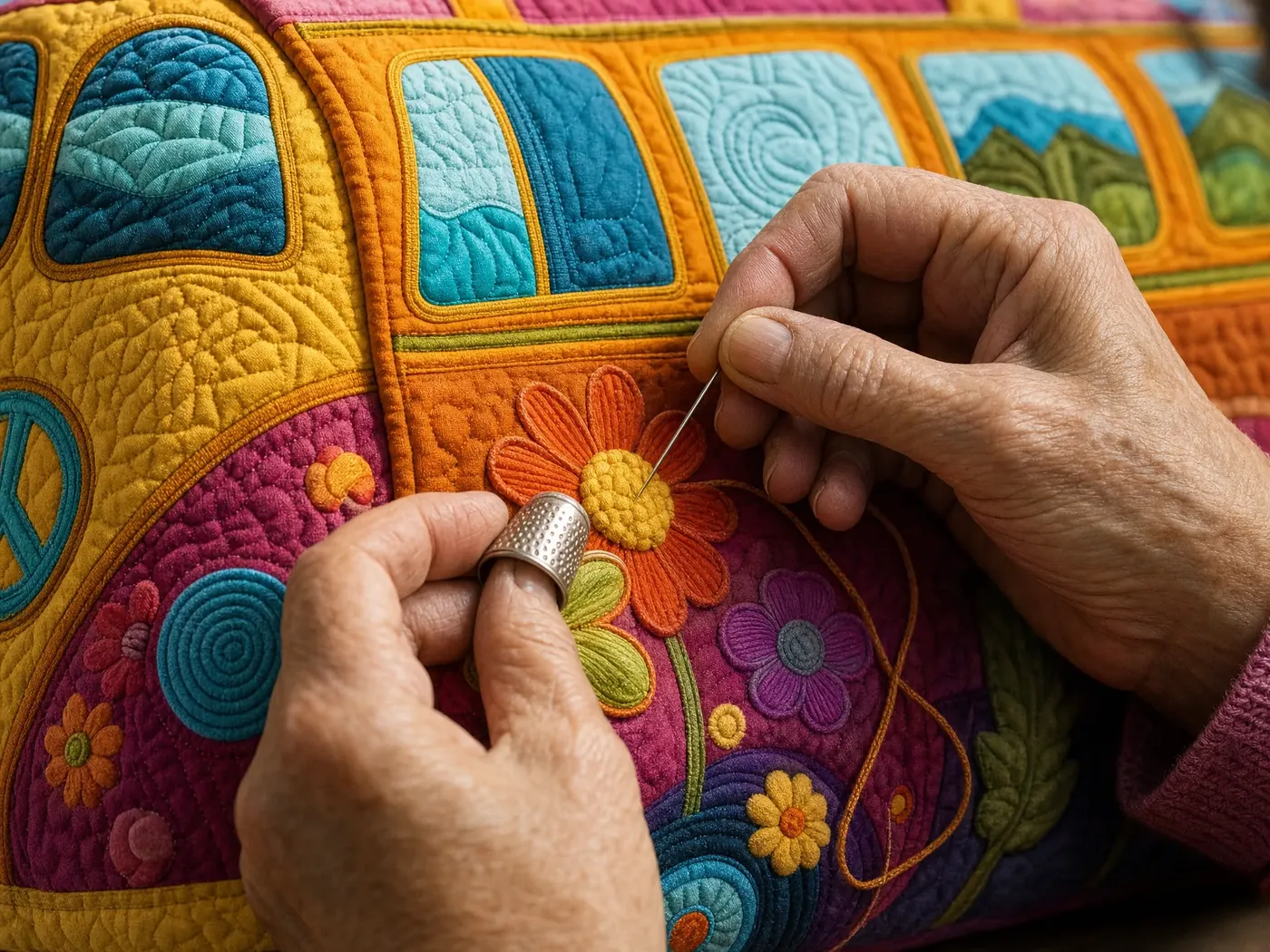
Hands stitching the VW bus applique on a HippieBus Weekender
1

Cut by hand

Each panel is cut one bag at a time.

2

Quilted row by row

The quilting is sewn row by row over thick batting.

3

The bus goes on

The bus front is layered fabric, stitched down piece by piece.

4

Numbered by hand

Every HippieBus Weekender gets a cloth tag numbered in pen.

Hand quilting is slow work. Hand quilting a quilt of about 25 square feet can take 34 hours, and a queen-size Scrappy Irish Chain where each of the white blocks has a different flower design and the rest is crosshatch can take 58 hours. A HippieBus Weekender takes about 14 hours, because on top of the quilting there are curves, handles and the applique.

Real vs. Fake Handmade

Is My HippieBus Weekender Really Hand Quilted?

Hand quilting is usually done in a hoop or on a frame using special needles called betweens, and the stitches go through to the backing. Hand quilting yields a dotted, puckering line, while machine quilting, although faster, gives a straighter, finer line and a harsher look. Hand quilting seems softer and more dimensional. Traditionally makers used hand stitching to applique fabric pieces to the ground, but many quilters today use the sewing machine, with straight topstitching, a tiny zig-zag or a blanket stitch, which results in more visible stitching.

Rosie holding a finished HippieBus Weekender from the final batch

On the HippieBus Weekender, look for the hand-numbered cloth tag in the inner pocket. The lookalikes sold on big marketplaces don't have one.

HippieBus Weekender Sale

Claim One of the Last HippieBus Weekenders

When the 850 hand-numbered HippieBus Weekender bags are gone, the design is retired for good.

HippieBus Weekender final batch offer
HippieBus Weekender · 50% OFF

HippieBus Weekender

$69.95 $139.90

Single bag. Multi-bag bundles from $41.97 per bag at checkout.

Get My HippieBus Weekender & Save 50%

Ships within 48 hours

30DAY

30-Day Money-Back Guarantee

Return your HippieBus Weekender within 30 days of receipt for a refund under the returns policy.

Customer Reviews

What HippieBus Weekender Owners Say

Linda holding her HippieBus Weekender
★★★★★

My HippieBus Weekender gets noticed

"Three people stopped me at the farmers market to ask about this bag. You can tell it's handmade from six feet away. Mine is #212 and someone wrote that on the tag by hand."

Linda H., Portland OR · Verified Buyer
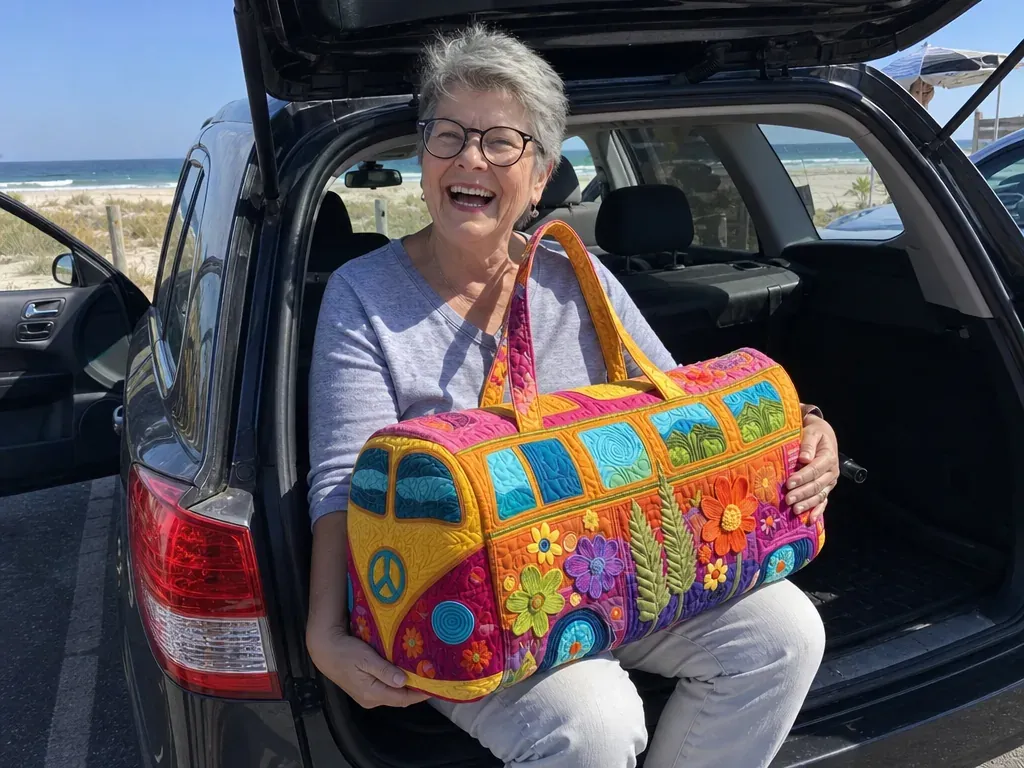
Carol with her HippieBus Weekender in the car
★★★★★

HippieBus Weekender rides shotgun

"Took it to the coast the weekend it came and it's been on every trip since. Two nights fits fine, and the zipper opening flat makes packing in a motel easy."

Carol M., Santa Fe NM · Verified Buyer
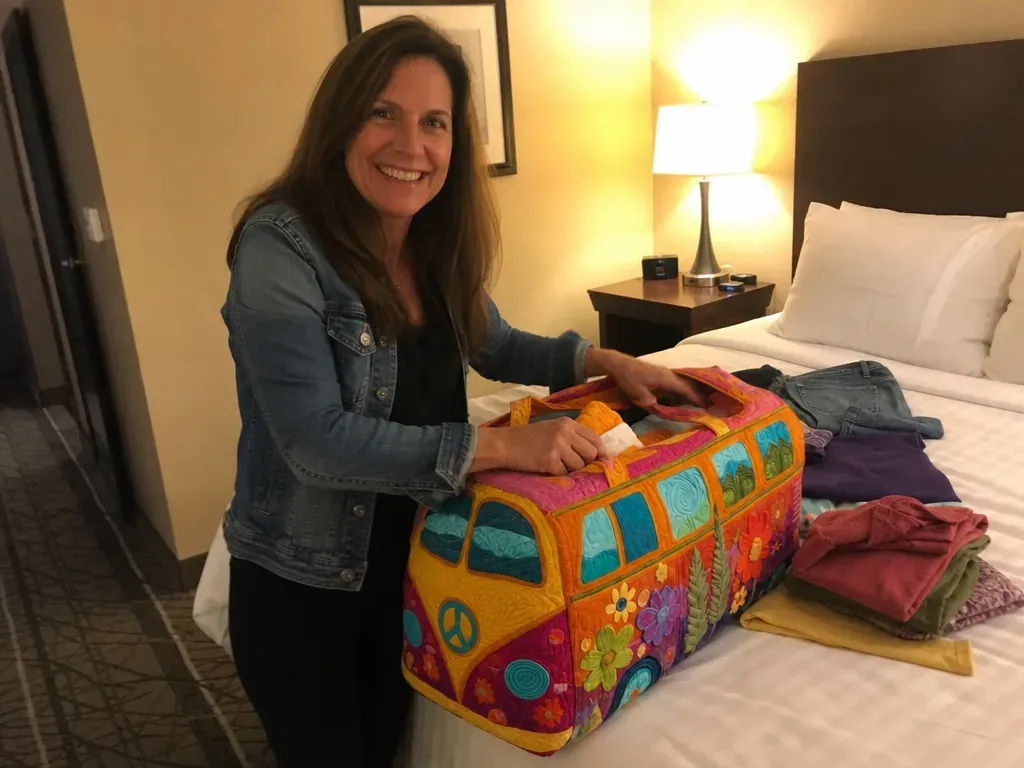
Dana unpacking her HippieBus Weekender
★★★★★

HippieBus Weekender stitching

"I was on the fence till I saw the stitching up close. Real thread on every row and the bus is layered fabric. Only wish it had an outside phone pocket."

Dana R., Nashville TN · Verified Buyer
Judy K.
★★★★★

"Mine is from 2016. Nine years of trips and the colors are still bright, and the quilting got soft like an old jean jacket."

Judy K. · Verified Buyer
Frank D.
★★★★★

"Got it for my wife's 60th. She grew up near Taos and teared up when she saw the number written on the tag."

Frank D. · Verified Buyer
HippieBus Weekender Specs

HippieBus Weekender Size & Specs

CapacityTwo to three days of clothes, shoes and a toiletry kit
TravelSized for most US domestic carry-on allowances
OpeningWraparound zipper, opens flat
HandlesPadded and quilted
MaterialsPremium cotton over poly batting
PocketsOne inner pocket
EditionFinal batch of 850, hand-numbered
Woman carrying the HippieBus Weekender at a train station

Most manufacturers list a bag's packing capacity in liters, and for a weekend trip you'll want at least 30 liters if you're a light packer or only bringing summer clothes. If you want options or are bringing bulkier cold-weather clothes, aim for a bag with at least 40-45 liters of packing space. Padded straps, multiple carrying options, and load lifters all help take the strain off your body. If you're traveling by plane, pay attention to the airline's size regulations for carry-on bags, and keep in mind that you can usually bring one carry-on and one personal item on board.

Airlines set carry-on limits in inches, not liters, and a soft duffel can be squeezed on one side so it fits the overhead space better than a hard-sided suitcase of the same volume. Aim for 22x14x9 inches. It has no outside pocket, though.

For flying, the International Air Transport Association recommends a maximum cabin bag size of 56 x 45 x 25 cm (22.0 x 17.7 x 9.8 in), including wheels, handles and pockets. Most US airlines publish a 22 x 14 x 9 inch box instead, and a basic fare may only include a personal item, so check the baggage allowance on your own reservation before you pack the HippieBus Weekender for a flight.

HippieBus Weekender Packing

How to Pack Your HippieBus Weekender for a Weekend

A typical weekend packing test uses the same items in each bag: two pairs of jeans, two t-shirts, one sweater, a pair of long pajamas, two pairs of thick socks, sneakers, a medium toiletry bag, a laptop, chargers, a tablet and sunglasses. That's a fair picture of a weekend. Roll the soft stuff, put the shoes in a bag along the bottom, and keep the toiletries on top for security, where liquids have to be 3.4 ounces or less in one quart bag. With the help of packing cubes, a cotton weekender this size can take enough clothes for 4-5 days, toiletries, a flat iron, shoes, and odds and ends. The HippieBus Weekender zips open flat, which makes that kind of packing easier.

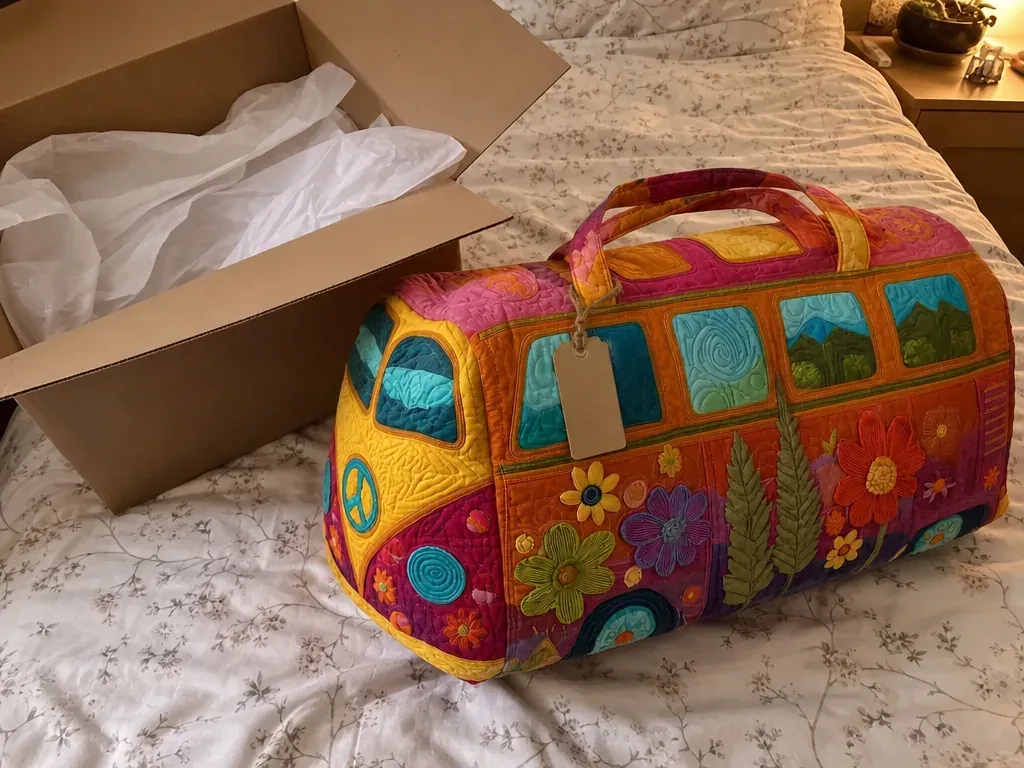
A new HippieBus Weekender just out of its box
HippieBus Weekender vs. Others

HippieBus Weekender vs. Typical Weekender Bags

HippieBus WeekenderMass-made quilted bagNylon duffel
How it is madeBy hand, one makerFactory lineFactory line
DesignLayered fabric appliquePrinted patternPlain color
PaddingHand quilting over battingMachine quiltingLittle or none
Outside pocketsNoneUsually severalUsually one or two
WashingSpot clean onlyOften machine washableWipe clean
One of a kindYes, numbered tagNoNo

Travel + Leisure picked the Vera Bradley Weekender as its best cotton bag: 19 x 13 x 8 inches, 29 liters, cotton and recycled cotton, with a water bottle pocket, exterior zipper pockets, mesh interior pockets and a trolley sleeve, and you can put it in the wash when it gets dingy. The one gripe is the lack of a laptop pocket. On some of the black ones the quilting has started to unravel almost immediately, and stitching on bags packed to the brim gets put under real pressure.

On a quick trip a Vera Bradley weekender fits in the overhead bin beautifully, isn't too bulky to carry, and goes down the plane aisle without clobbering any innocent bystanders. It is a bit unstructured, so if you put too much stuff in it, it puffs out a bit and loses its shape, but that's just incentive to not overpack. A HippieBus Weekender owner will recognize the soft cotton feel, though the hand quilting gives it more body empty.

The duffels the r/onebag crowd keeps coming back to are mostly technical: The North Face Base Camp Duffel in small and XL for years of work travel, Black Hole 60L bags (not packed full) with shoulder straps for 2+ week trips in Europe, or a Forclaz duffel that compresses to 30L for shorter trips but expands when needed, for about £40.

HippieBus Weekender FAQ

HippieBus Weekender Questions & Answers

Is the HippieBus Weekender really handmade?

Yes. It's cut, quilted and appliqued by hand in Taos, New Mexico, and every bag gets a hand-numbered cloth tag in the inner pocket.

How much fits in the HippieBus Weekender?

About two to three days of clothes, a pair of shoes and a toiletry kit. The zipper wraps around so it opens all the way.

Is the HippieBus Weekender a carry-on?

It's sized for most US domestic carry-on allowances, but every airline and fare is different, so check before you fly.

Can I wash my HippieBus Weekender?

Please don't use a washer or dryer. Spot clean with a damp cloth and mild soap, then air dry out of direct sun.

Why is the HippieBus Weekender 50% off?

It's the final batch. The maker is retiring, and when these are gone the HippieBus Weekender is retired too.

Pack Happy. Go Anywhere.

One maker, 39 years and a last batch of 850. If you want a HippieBus Weekender that nobody else at baggage claim is carrying, now is the time.

Get My HippieBus Weekender Now